
If your lights flicker or a socket feels warm, you likely suspect a problem, but what if the most significant risks in your home are the ones you cannot see or hear? An electrical system health check North East properties require is not just a box-ticking exercise; it is a vital diagnostic roadmap for your home’s safety. It is understandable that many residents in our region feel a sense of trepidation when inviting an electrician into their home. You might worry that a simple inspection will inevitably lead to a recommendation for a full, costly rewire, or perhaps you are a landlord struggling to keep pace with the latest 2026 regulations.
In this guide, we will dispel common myths surrounding electrical safety and explain why a professional assessment is your best defence against the risks of fire and system failure. We will explore the specific requirements for different property types, from modern builds to historic terraces, whilst outlining exactly what you can expect during a standard inspection. This clarity ensures you can maintain your property with confidence, knowing that your electrical system is both compliant and safe.
Key Takeaways
- Understand why a professional electrical health check is a proactive diagnostic tool for your home’s fixed wiring, going far beyond a simple visual inspection.
- Learn to identify hidden hazards that invisible electrical faults can cause, even when your lights and appliances appear to be functioning normally.
- Discover the vital components of a comprehensive electrical system health check North East properties require to ensure they meet modern safety standards.
- Recognise the critical warning signs, such as persistent circuit tripping or warm sockets, that indicate your property needs immediate professional attention.
- Gain peace of mind by understanding how a detailed assessment protects your household from the risks associated with outdated cabling or lack of RCD protection.
What is an Electrical System Health Check?
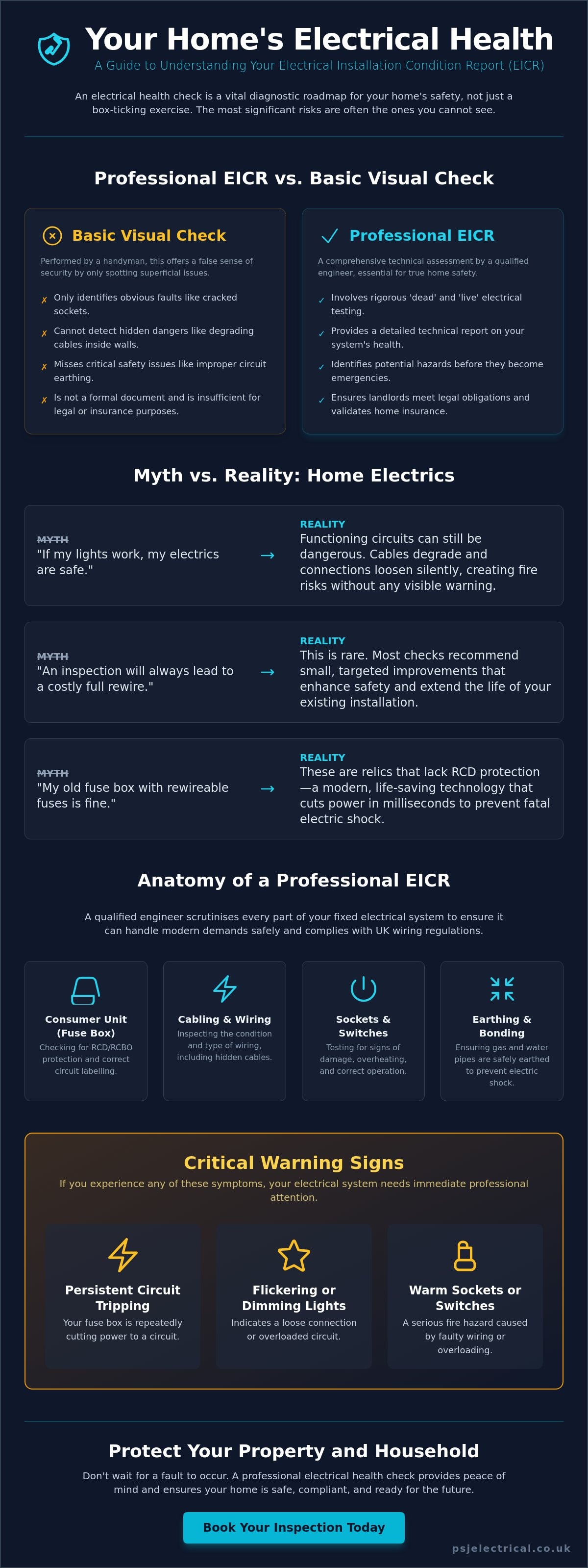
An electrical system health check North East properties undergo is a comprehensive, technical assessment of the fixed wiring that powers your home. It isn’t merely a check to see if your switches work; it’s a deep-dive into the property’s infrastructure. Whilst many homeowners are familiar with Portable Appliance Testing (PAT), which covers movable items like kettles or lamps, a health check focuses on the permanent elements like the consumer unit, cabling, and sockets. Formally known as an Electrical Installation Condition Report (EICR), this process is about proactive safety. It identifies potential hazards before they escalate into emergencies. For those owning property in Newcastle or Durham, hiring a qualified, registered engineer is the only way to ensure the work meets the high standards required for modern living.
Our region has a diverse range of housing stock, from historic Victorian terraces in Jesmond to modern developments in Durham. Each era of construction brings its own set of electrical challenges. An older property might still have lead or rubber-sheathed cabling, which can be incredibly dangerous as it perishes over time. A modern health check doesn’t just look for what is already broken; it looks for what is likely to fail. By choosing a professional electrical system health check North East specialists provide, you’re investing in the longevity of your home and the safety of everyone inside it.
EICR vs. Visual Inspections: Knowing the Difference
Relying on a casual visual check from a handyman is a significant risk that often leads to a false sense of security. A visual inspection might spot a cracked socket or a loose faceplate, but it won’t detect a degrading cable hidden behind a wall or an improperly earthed circuit. A professional EICR involves rigorous “dead testing” and live diagnostic checks that provide a technical snapshot of your system’s health. This formal documentation is essential for insurance validity and ensures landlords meet their legal obligations under current UK safety legislation.
The Scope of a Professional Inspection
A professional inspection covers everything from the main consumer unit to the earthing and bonding of your water and gas pipes. Engineers scrutinise “hidden” wiring under floorboards and within wall cavities, which is often where the most significant degradation or rodent damage occurs. Modern homes now face far greater power demands than in previous decades. With the rise of high-drain devices, smart home hubs, and EV chargers, your system must strictly adhere to the UK wiring regulations to prevent overheating and circuit failure.
Myth vs. Reality: Common Misconceptions About Home Electrics
Many homeowners assume that if their toaster pops and their lights glow, their electrical system is fundamentally sound. Electricity behaves invisibly; it doesn’t always give a warning before a fault occurs. A professional electrical system health check North East properties receive often reveals a different story beneath the surface. Just because a circuit is functioning doesn’t mean it’s safe. Cables can degrade, connections can loosen, and insulation can perish without any outward sign until a failure or a fire begins. Relying on “it works fine” is a gamble that ignores the natural wear and tear of a property’s infrastructure.
There is also a persistent anxiety that booking an inspection is merely the first step toward a mandatory full rewire. This is rarely the case. In reality, most health checks lead to small, targeted improvements that extend the life of your existing installation. Similarly, attempting to verify safety with a basic DIY multimeter is not just insufficient; it’s potentially dangerous. These consumer-grade tools cannot simulate the high-voltage conditions necessary to test insulation resistance or verify the speed at which a circuit will trip during a fault. Only a qualified engineer has the calibrated equipment and technical expertise to certify a system as safe.
The “My Fuse Box is Fine” Fallacy
Old rewireable fuses are a relic of a different era. They were designed for a time when the average home had far fewer appliances and no sensitive electronics. These units often lack Residual Current Device (RCD) protection, which is the life-saving technology that cuts power in milliseconds if a fault is detected. Many older Newcastle property installations still rely on these outdated boards, leaving residents vulnerable to surges and shocks. For more detail on why these units are often inadequate for 2026 standards, you can read our Replacing Old Fuse Boards in Newcastle guide. Durham homeowners should also review our dedicated fuse box replacement Durham safety checklist to understand the specific 2026 compliance requirements for their properties.
The Cost of Prevention vs. The Cost of Failure
It’s helpful to view an inspection as a diagnostic tool rather than a chore. Identifying a “C3” issue, which is a recommendation for improvement, allows for planned, affordable maintenance. Ignoring it can lead to a “C1” emergency, where danger is present and the system must be isolated immediately. For landlords in Durham, these checks are a legal necessity. Failing to provide a valid report can result in fines of up to £30,000, making the cost of the check a very small investment compared to the cost of non-compliance. If you’re unsure about the age or condition of your installation, you can speak with our team for professional advice.
The Anatomy of a Professional EICR in the North East
A professional electrical system health check North East engineers conduct follows a meticulous, multi-stage process designed to uncover every potential vulnerability. It begins with a comprehensive visual inspection. During this phase, the engineer looks for external evidence of distress, such as scorched sockets, discoloured plastic, or signs of overheating at the consumer unit. This stage is vital for identifying outdated materials like lead or rubber-sheathed cabling, which were common in properties built before the mid-1960s and have often reached the end of their safe working life. After the visual survey, the engineer moves into dead testing. This requires the power to be isolated so that the continuity of conductors and the integrity of insulation can be measured. These tests ensure that the wires aren’t touching where they shouldn’t be and that the electricity will flow exactly where it’s intended.
Once the dead tests are completed, live testing begins. This is where we verify that your safety devices, such as Residual Current Devices (RCDs), respond with sufficient speed to prevent a fatal shock. During a fault, an RCD should trip in less than 40 milliseconds. If it fails this test, the property cannot be considered safe. The final stage of the electrical system health check North East homeowners receive is the production of the Electrical Installation Condition Report (EICR). This comprehensive document categorises every finding into clear, actionable codes, providing a transparent roadmap for any necessary improvements.
Understanding the Safety Codes (C1, C2, C3)
The results of your report are summarised using three primary codes. A C1 indicates “Danger Present” and requires immediate action, as there is a direct risk of fire or electric shock. A C2 is “Potentially Dangerous,” meaning the system might be safe for now but could become hazardous under fault conditions; these require urgent remedial work. Finally, a C3 is “Improvement Recommended.” This doesn’t mean your system has failed, but it suggests that your installation doesn’t meet the most recent standards for modern safety and efficiency.
Why North East Properties Present Unique Challenges
Our local landscape features a high concentration of Victorian terraces in Durham and older industrial-era homes in Consett. These properties often present unique challenges, such as a complete lack of proper earthing or the presence of amateurish DIY work performed decades ago. In many cases, these historic homes have been modified multiple times, leading to a “patchwork” system that struggles with modern appliance loads. If your report highlights widespread issues, you may need to consider a Full House Rewiring North East to bring the property up to current safety standards.
Warning Signs and When to Book Your Inspection
Recognising the early symptoms of electrical distress is a vital skill for any property owner. Whilst some issues are subtle, others are immediate calls to action. A persistent tripping of circuit breakers or the frequent blowing of fuses indicates that a circuit is struggling under its current load or that a fault is developing. Similarly, flickering lights or sockets that feel noticeably warm to the touch suggest loose connections or internal arcing, which can quickly lead to a fire if left unaddressed. One of the most alarming signs is a distinct smell of burning plastic; this typically indicates that insulation is overheating or that a component is melting. In some older properties, you might also notice a “green goo” appearing on switches or sockets. This is known as plasticiser migration, a chemical reaction in aging PVC wiring from the 1960s and 70s that can cause poor connections and eventual failure.
Booking an electrical system health check North East experts provide ensures these sensory warnings are professionally investigated before they become dangerous. If you haven’t had your installation inspected in several years, these signs are your system’s way of requesting maintenance. Waiting for a complete failure often results in more expensive repairs and unnecessary risk to your household.
The 10-Year Rule for Homeowners
For owner-occupied homes, industry standards recommend a formal inspection every decade. However, life events often necessitate a check sooner. If you are purchasing a new property in Yarm or Ponteland, an immediate health check is essential to understand exactly what you are inheriting. Relying on a basic homebuyer’s survey is insufficient, as those reports do not include technical electrical testing. Additionally, many modern home insurance policies require a valid EICR to remain in force. Without this documentation, you may find that your policy is void in the event of an electrical fire, leaving you with significant financial liability and no recourse.
Preparing for Modern Upgrades: Solar and EV
As we move toward a more sustainable future, many North East residents are looking to modernise their homes. A comprehensive health check is the mandatory first step before a Solar Panel Installation. These systems place a sustained load on your existing wiring, and any underlying weaknesses must be resolved first. This is particularly true for EV chargers, which draw a high amount of current for several hours at a time. If you live in an area with larger detached properties, our Consumer Unit Upgrade Guide for Darras Hall provides specific advice on ensuring your fuse board can handle these 2026 power demands. If you have noticed any of the warning signs mentioned above, it is prudent to book your safety assessment with a qualified engineer today.
Securing Your Property with PSJ Electrical Engineers
PSJ Electrical Engineers brings over 19 years of dedicated experience to every electrical system health check North East homeowners trust us to perform. Serving Newcastle, Durham, and Consett, we’ve built a reputation for quiet confidence and technical precision. We don’t believe in aggressive sales tactics or jargon-heavy reports. Instead, we provide a methodical assessment that prioritises the long-term safety of your property. Our reporting is designed to be thorough yet accessible, providing you with a clear, factual account of your system’s condition without unnecessary fluff. This transparency ensures you understand exactly what is required to keep your home compliant and safe.
One of our defining principles is our commitment to quality over quantity. We operate a strict “no-emergency call-out” policy, which distinguishes us from many other firms in the region. By choosing not to offer 24/7 emergency repairs, our engineers can dedicate their full attention to planned upgrades and comprehensive inspections. This approach ensures that every electrical system health check North East residents receive is conducted with the focus and care it deserves, rather than being rushed to meet a reactive call-out elsewhere. We believe that preventative maintenance is the most effective way to ensure the stability and longevity of your home’s infrastructure.
A Local Service for Local Properties
Our engineers possess an intimate understanding of the unique housing stock found across our region, from the coastal homes in Yarm to the rural properties in Stocksfield. This local knowledge is invaluable when identifying era-specific wiring faults or common installation errors found in certain types of North East builds. As an NICEIC registered company, we’re a trusted partner for those seeking to maintain their properties to the highest standards. We ensure all work strictly adheres to the latest UK safety regulations, providing you with the stability and peace of mind that comes from a long-standing local presence.
Next Steps: Booking Your Health Check
Booking your inspection is a straightforward process designed to be as informative as possible. Once you contact us, we’ll provide a clear quote and schedule a time that suits your requirements. We understand that finding faults can be stressful, which is why we provide transparent, honest advice on any remedial works that may be necessary. Our goal is to ensure your home remains a safe environment for your family, backed by the expertise of a professional who takes personal pride in the quality of their outcome. If you’re ready to secure your home, you can book your professional electrical health check with PSJ Electrical today.
Securing the Future of Your North East Home
Maintaining a safe property starts with moving beyond the misconception that “if it works, it’s safe.” An electrical system health check North East properties receive is a vital diagnostic tool that identifies hidden risks before they become emergencies. By understanding the technical depth of an EICR and the significance of safety codes, you can make informed decisions about your home’s infrastructure. Whether you’re preparing for modern upgrades like EV chargers or simply ensuring your older property meets current standards, professional verification is the only way to achieve genuine peace of mind.
PSJ Electrical Engineers provides over 19 years of local expertise, specialising in full rewires and comprehensive EICR testing. Our fully accredited engineers are committed to delivering transparent, factual assessments that prioritise your safety and compliance. Ensure your home is safe—book your electrical health check with PSJ Electrical today. Taking this proactive step protects your household and ensures your property remains a stable, secure environment for years to come.
Frequently Asked Questions
Is an electrical health check a legal requirement for homeowners in the North East?
Whilst not a legal requirement for owner-occupiers, an electrical system health check North East properties undergo is essential for insurance validity and personal safety. Most insurance providers expect homeowners to maintain their property to a safe standard. If a fire occurs and the wiring is found to be faulty and uncertified, your claim could be rejected. Landlords, however, must legally comply with the 2020 regulations to avoid significant fines.
How much does a professional EICR cost for a 3-bedroom house?
The cost of a professional inspection depends on several factors, including the size of your property and the total number of circuits being tested. A larger 3-bedroom house with a complex distribution board will require more time for thorough diagnostic checks than a smaller flat. We recommend requesting a bespoke quote to ensure the assessment covers all specific requirements of your installation and provides a comprehensive safety overview.
How long does a full electrical system health check take to complete?
A comprehensive inspection typically takes between three and four hours for a standard domestic property. This duration allows the engineer to perform both visual surveys and technical tests across every circuit. Larger homes or those with older, more complex wiring systems may take longer to ensure every hidden fault is identified and documented correctly in the final report. We don’t rush these checks as precision is vital for safety.
Do I need to turn the power off during the electrical inspection?
Yes, the electricity will need to be isolated for a significant portion of the inspection. This is necessary for dead testing, where we check the integrity of the insulation and the continuity of the conductors. We advise homeowners to plan for this downtime by turning off sensitive electronics and avoiding the use of appliances whilst the engineer is working. We’ll always let you know before the power is disconnected.
Will an old fuse box automatically fail an electrical health check?
An old fuse box won’t automatically fail, but it is unlikely to meet current safety standards. Older units often lack life-saving RCD protection, which usually results in a C3 recommendation for improvement. However, if the board shows signs of overheating or has incorrect fuse wire installed, it could receive a C2 code. This would render the report unsatisfactory until the unit is replaced or repaired by a qualified professional. If you are considering an upgrade, understanding the cost of new consumer unit UK installations and 2026 safety standards will help you budget and plan accordingly.
How often should a landlord in Durham have an EICR carried out?
Landlords in Durham and across England are legally required to have an EICR conducted at least every five years. This requirement is part of the Electrical Safety Standards in the Private Rented Sector Regulations 2020. You must also provide a copy of the report to new tenants before they move in and to existing tenants within 28 days of the inspection. Failure to comply can result in fines of up to £30,000.
Can I sell my house in Newcastle without a valid electrical safety certificate?
You can legally sell a property without an electrical safety certificate, but it often complicates the conveyancing process. Most solicitors and buyers in Newcastle will request proof that the electrics are safe before exchanging contracts. Providing a recent electrical system health check North East buyers can trust often speeds up the sale. It also prevents last-minute price renegotiations based on suspected wiring faults or outdated consumer units.
What happens if my property receives an “Unsatisfactory” report?
If your report is unsatisfactory, it means the engineer has identified C1 or C2 faults that pose a risk. You are required to have remedial work carried out to address these specific issues, usually within 28 days. Once the repairs are completed, you will receive documentation confirming the system is now safe. This should be kept alongside the original report for your records and to prove compliance to insurers or local authorities. If your consumer unit is identified as a key concern, our fuse box replacement Durham guide outlines the steps required to bring your installation in line with the latest 2026 safety standards.