
Most homeowners believe that the solar panels on the roof are the most important part of a renewable energy transition, but the real hero of a successful installation is actually hidden behind your cupboard door. Your existing wiring and fuse box form the foundation of your energy future, yet many people overlook the necessity of upgrading electrical system for solar until they’re faced with unexpected delays or safety concerns. It’s understandable to feel a sense of trepidation when you’re confronted with technical jargon like “DNO applications” or the fear that an older property might require modernisation to remain fire-safe.
We agree that transparency is vital when it comes to your home’s safety and your long-term investment. This guide will teach you exactly how to prepare your property’s infrastructure for a compliant solar PV installation that meets the latest 2026 standards. You’ll gain a clear understanding of the required upgrades, from the 120% rule to modern consumer unit requirements, ensuring your transition to green energy is both smooth and secure. We’ll provide a comprehensive checklist to help you move forward with the quiet confidence that your home is ready for the future.
Key Takeaways
- Understand how your current infrastructure and the age of your fuse box dictate your home’s capacity for a successful renewable energy transition.
- Identify the specific technical requirements for upgrading electrical system for solar, including the shift towards modernised, metal-clad consumer units.
- Learn why main earth bonding and dedicated circuits are essential safety components for ensuring your solar inverter operates efficiently and safely.
- Discover how to future-proof your property by coordinating solar, battery storage, and EV charging within a single, robust electrical framework.
- Gain clarity on complex grid regulations by understanding the difference between G98 and G99 notifications for your local distribution network operator.
Assessing Your Property’s Readiness for Solar Energy
Many homeowners in the North East, particularly those living in our beautiful stone-built terraces or mid-century semi-detached houses, often overlook the internal infrastructure when planning a photovoltaic (PV) system. Whilst the solar panels themselves are the visible face of your investment, the capacity and condition of your internal wiring dictate whether that system will actually perform as expected. If your home hasn’t seen a significant electrical update in the last twenty years, the process of upgrading electrical system for solar becomes a necessary step to ensure safety and long-term reliability.
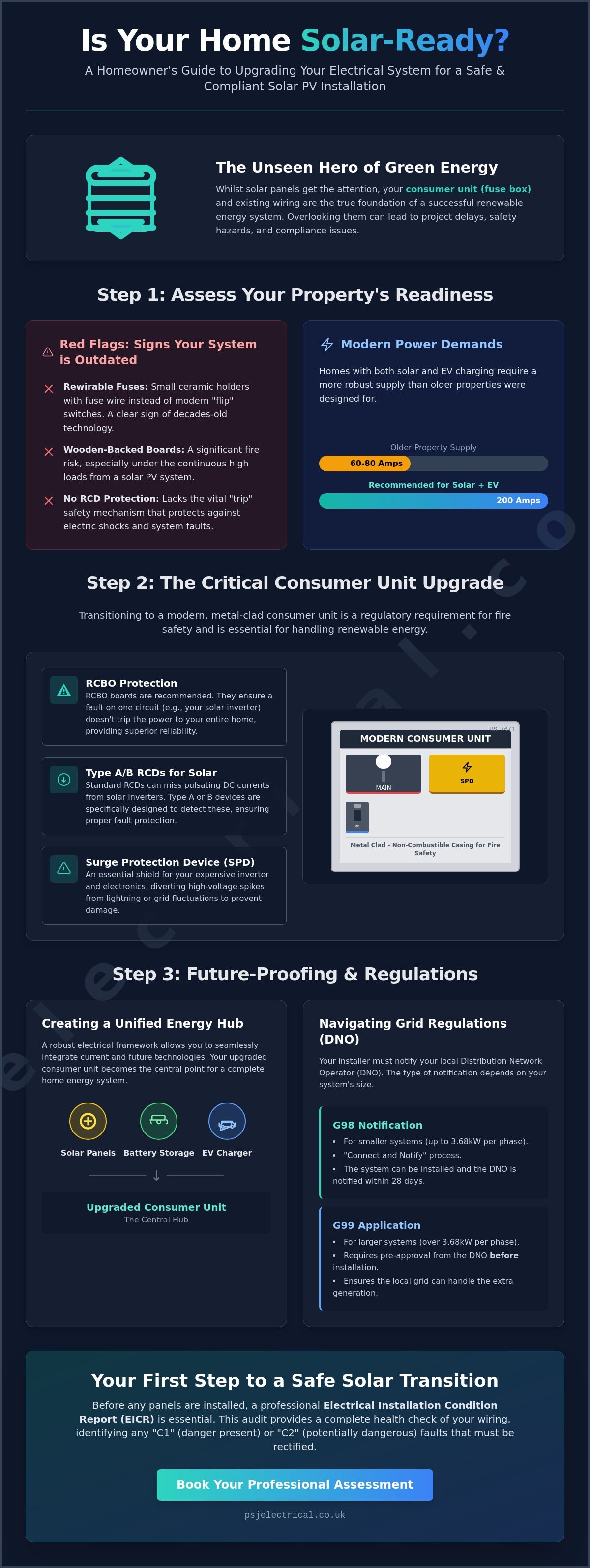
Your consumer unit, or fuse box, acts as the central hub for your home’s energy. In older properties across Durham and Northumberland, we frequently encounter units that were never designed to handle the bidirectional flow of electricity that solar requires. Whilst older properties may operate on a 60 or 80-amp supply, a 200-amp electrical service is now the recommended standard for homes integrating both solar and EV charging. A professional load calculation will determine if your existing service can handle the additional demand without overloading. You’ll also need to consider the physical footprint of the installation. A modern solar setup requires dedicated wall space, usually in a garage or utility room, to house the inverter and potentially a battery storage unit. These components need adequate ventilation and clear access for maintenance.
Signs Your Current System is Outdated
Identifying an ageing system is often straightforward if you know what to look for. If your fuse box features rewirable fuses, which are small ceramic holders with thin wire, rather than modern “flip” switches, it’s a clear sign that your infrastructure is decades behind current standards. Wooden-backed fuse boards are another red flag. These pose a significant fire risk when subjected to the continuous high loads of a solar system. Additionally, the absence of a Residual Current Device (RCD) means your home lacks the vital “trip” mechanism that protects against electric shocks and potential faults within your solar array.
The Importance of an Initial Electrical Audit
Before any panels are fixed to your roof, a professional electrical installation condition report eicr is essential. This audit provides a comprehensive health check of your wiring, identifying hidden issues that could jeopardise your installation. In the context of solar readiness, an EICR might highlight “C1” (immediate danger) or “C2” (potentially dangerous) faults. These must be rectified before work begins. By addressing these findings early, you avoid the frustration of mid-project delays and ensure that upgrading electrical system for solar is handled with technical precision from the very start.
How to Upgrade Your Consumer Unit for Solar PV
Transitioning from a traditional plastic fuse box to a modern metal-clad consumer unit is the most critical technical step when upgrading electrical system for solar. This isn’t just about aesthetics or making space; it’s a regulatory requirement designed to enhance fire safety across your entire property. Modern units must be constructed from non-combustible material, typically steel, to prevent the spread of fire should a fault occur. Beyond the casing, the internal components must be specifically chosen to handle the unique characteristics of renewable energy generation.
Standard circuit breakers aren’t always enough for modern needs. Solar installations require specific protection, often in the form of Type A or Type B Residual Current Devices (RCDs). These are designed to detect “pulsating” DC currents that can be generated by solar inverters, something standard Type AC RCDs might miss. We also strongly recommend integrating a Surge Protection Device (SPD). This component acts as a shield for your expensive inverter and sensitive home electronics, diverting high-voltage spikes caused by lightning or grid fluctuations. Protecting your investment from the start is far more cost-effective than replacing a fried inverter later.
Step 1: Selecting the Right Consumer Unit
Choosing between a split-load board and an individual RCBO board is a key decision. We usually advise homeowners to opt for an RCBO (Residual Current Breaker with Overcurrent protection) board. This setup ensures that a fault on one circuit, such as your solar array, won’t trip the power to your entire house. When replacing old fuse boards in Newcastle, we also ensure there are at least two or three spare “ways” or slots. This provides room for future additions like battery storage or an EV charger without needing another full board replacement. While homeowners in the US might research a federal tax credit for electrical panel upgrades, UK residents should focus on the immediate safety and efficiency gains that a modern board provides.
Step 2: The Installation and Commissioning Process
A professional installation is a methodical process that begins with a full site safety check. Your power will be safely isolated whilst the old board is removed and the new metal-clad unit is wired in. Once installed, every circuit undergoes rigorous testing to ensure it meets current BS 7671 safety standards. You’ll receive an Electrical Installation Certificate, and we will handle the Part P building regulations notification on your behalf. This certification is vital for your home insurance and any future property sale. If you’re unsure about your current board’s capacity, you can speak with our technical team for tailored advice on upgrading electrical system for solar.
Beyond the Fuse Box: Wiring and Earthing Requirements
Whilst the consumer unit acts as the brain of your home’s energy management, the cables and earthing system serve as the vital circulatory system. When you are upgrading electrical system for solar, you must look beyond the fuse box to ensure the physical wiring can handle a continuous, high-current load. Unlike a kettle or a toaster that runs for mere minutes, a solar inverter can operate at peak capacity for several hours. This sustained demand generates heat, and older, thinner cables simply aren’t designed to cope with that level of thermal stress without degrading over time.
In some instances, particularly in older properties across Durham or Newcastle that still feature lead or rubber-sheathed cabling, the existing infrastructure may be too brittle to support renewable technology. In these cases, a full house rewiring in the North East becomes an essential prerequisite. This modernisation ensures that every circuit, not just the solar connection, is safe, compliant, and capable of supporting a modern lifestyle. It is a significant undertaking, but it provides the peace of mind that your home’s foundation is built for the next fifty years of energy innovation.
The Critical Role of Main Earth Bonding
Safety is paramount. A solar installer cannot legally or safely commission a system if your property’s earthing is inadequate. We frequently find that older homes use 6mm bonding cables, which were standard decades ago but are now insufficient. Current regulations require a minimum of 10mm main earth bonding to your gas and water service pipes. This ensures that in the event of an electrical fault, the current is safely diverted to the ground, protecting both the occupants and the sensitive electronics within your solar array. Without this upgrade, you risk equipment failure or, in extreme cases, electrical fires.
Dedicated Solar Circuits and Cable Sizing
Your solar inverter requires its own dedicated circuit, running directly from the consumer unit to the inverter location. This isn’t a task for standard 2.5mm twin and earth cable used for domestic sockets. We must calculate the correct cable thickness based on the distance of the run to prevent “voltage drop,” which can significantly reduce the efficiency of your system. You will also need to consider the following:
- DC Cabling: Specialised, UV-resistant cables that run from the panels to the inverter, designed to withstand extreme roof temperatures.
- AC Cabling: Heavy-duty armoured cable or conduit-protected wiring that links the inverter back to your upgraded consumer unit.
- Safe Routing: Ensuring cables are not crushed under floorboards or routed too close to heat sources, maintaining the integrity of the insulation.
By focusing on these often-overseen elements of upgrading electrical system for solar, you ensure your installation is not just functional, but built to the highest professional standards of safety and durability.
Future-Proofing: Solar, Batteries, and EV Charging
Modernising your property for renewable energy is rarely a standalone task. For most homeowners, upgrading electrical system for solar is the first step in a broader transition toward total energy independence. By taking a “whole home” approach, you can ensure that your infrastructure isn’t just capable of supporting panels today, but is also ready for the high-demand appliances you’ll likely add tomorrow. Treating your electrical system as a unified hub rather than a collection of separate circuits prevents the need for disruptive and costly remedial work in the future.
Smart energy management systems are becoming the standard in 2026, allowing you to monitor and direct power flow with precision. These systems require specific data cabling and sensor installations near your main incoming supply. Planning for these requirements during your initial solar upgrade ensures that your home is capable of balancing the complex interplay between generation, storage, and consumption without manual intervention.
Integrating Battery Storage Systems
Adding a battery allows you to capture excess generation during the day for use at night, but it places unique demands on your consumer unit. You’ll need to choose between an AC-coupled system, which is often easier to retrofit, and a DC-coupled system, which can be more efficient for new installations. Beyond the technical connection, physical placement is vital. Batteries should be installed in a well-ventilated area with appropriate fire-rated surroundings to meet current safety standards. These components are essential for those looking to get the most out of renewable energy solutions in the North East, as they provide the stability needed to navigate varying weather conditions whilst maintaining a consistent power supply.
Preparing for Electric Vehicle Charging
If you don’t already own an electric vehicle, it’s highly probable you will in the coming years. A Level 2 EV charger requires a dedicated 240V circuit and can draw significant current, often needing a 60-amp circuit to safely manage a continuous 48-amp load. When you are upgrading electrical system for solar, installing a high-capacity consumer unit with spare ways is a prudent move. This allows for the seamless addition of an EV charger without overloading your main fuse. We often recommend the installation of load-shedding devices or “priority switches.” These intelligent components automatically throttle the power to your EV charger if they detect that your home’s total demand is approaching its limit, ensuring your main fuse never trips during peak times. To ensure your home is fully prepared for this integrated future, you can request a future-proofing consultation with our technical specialists.
Navigating Regulations and Professional Installation
The final stage of upgrading electrical system for solar involves moving from physical installation to formal compliance. Whilst the technical work ensures your home is safe, the regulatory work ensures your system is legally recognised and permitted to interact with the wider grid. In the North East, this process is overseen by Northern Powergrid, our local Distribution Network Operator (DNO). They are responsible for the infrastructure that brings power to your street, and they need to ensure that the energy your solar panels export doesn’t destabilise the local network.
Engaging professional solar panel fitters in Stocksfield or Durham is essential for managing these administrative hurdles. A specialist installer will ensure your system is MCS (Microgeneration Certification Scheme) certified, which is a prerequisite for accessing the Smart Export Guarantee (SEG) payments. Without this certification, you cannot be paid for the excess energy you send back to the grid. Professional installers also ensure that every technical update, from the consumer unit to the earthing, adheres to the latest BS 7671 wiring regulations. Homeowners with period properties, such as those seeking residential solar PV systems Yarm households require, face additional considerations around heritage aesthetics and conservation area planning that a specialist installer is best placed to navigate.
DNO Applications and Grid Connection
The type of notification required depends on the size of your installation. For a standard semi-detached home or terrace with a system capacity under 3.68kW per phase, we typically follow the “G98” process. This is a “connect and notify” procedure where Northern Powergrid is informed within 28 days of the system going live. However, if you’re installing a larger array or a high-capacity battery storage system, you’ll need a “G99” application. This requires prior permission from the DNO before the installation can begin. They will assess whether the local infrastructure, such as the substation serving your Newcastle street, has the capacity to handle your system’s potential export.
Certification and Insurance Peace of Mind
Once your system is commissioned, you must receive an Electrical Installation Certificate (EIC). This document is your proof that the work was carried out by a qualified professional and meets all safety standards. It’s also a vital piece of the puzzle for your property’s history. There is a direct link between valid certification and electrical testing for insurance purposes. Most home insurance providers require evidence of professional installation and regular testing to maintain your cover. Before your system goes live, ensure you have a complete documentation pack, including your MCS certificate, DNO confirmation, and EIC. This methodical approach to upgrading electrical system for solar guarantees that your investment is protected, compliant, and ready to provide clean energy for decades to come.
Securing Your Home’s Energy Future
Modernising your property for renewable technology is a comprehensive journey that extends far beyond the roof panels. By ensuring your consumer unit meets 2026 safety standards and your earthing is robust, you create a stable environment for your new solar array. We’ve explored how a methodical approach to upgrading electrical system for solar not only meets current regulations but also prepares your property for the eventual addition of battery storage and electric vehicle charging, whilst ensuring your home operates at peak efficiency. This proactive planning protects your investment and provides the foundation for long-term energy independence.
Professional oversight is the only way to guarantee that your installation is compliant with Northern Powergrid’s requirements and fully protected by your home insurance. With over 19 years of local engineering experience, our team is fully qualified to handle Solar PV installations, EV chargers, and full rewires across Newcastle, Durham, and the wider North East. We pride ourselves on delivering transparent advice and high-calibre workmanship that provides lasting peace of mind for every homeowner we serve.
Book a Professional Electrical Assessment for Solar Today
Your transition to clean, sustainable energy is an exciting milestone. With the right infrastructure in place, you can look forward to decades of reliable, safe, and efficient performance from your renewable system.
Frequently Asked Questions
Do I always need a new fuse box for solar panels?
You don’t always require a full replacement, but most older properties will need an update to meet current safety standards. Modern solar installations require metal-clad consumer units and specific Type A or Type B RCD protection to handle the unique electrical currents generated by the system. If your current board is plastic or lacks sufficient space for new circuits, a replacement is the most reliable way to ensure a safe and compliant installation.
What is the DNO, and why do they need to be notified about my solar upgrade?
The DNO, or Distribution Network Operator, is the company responsible for the power lines and infrastructure in your region, such as Northern Powergrid. They must be notified to ensure that the energy your solar panels export back to the grid doesn’t overwhelm the local substation or cables. Depending on your system’s size, we handle either a G98 “connect and notify” application or a G99 “application for energy export” on your behalf.
Can I install solar panels if my house has old wiring?
Installation is possible, but only if your existing wiring is in a safe, serviceable condition. Solar generation places a continuous, high-current load on your cables for many hours a day, which can cause older, brittle wiring to overheat. During our initial assessment, we check for signs of degradation. If the wiring is lead-sheathed or lacks a proper earth, a partial or full re-wire may be necessary before proceeding with the solar array.
How much extra space do I need in my consumer unit for solar?
You typically need a minimum of two spare “ways” or slots in your consumer unit to accommodate the solar circuit and required surge protection. However, we strongly recommend choosing a board with four or more spare slots. This extra capacity allows you to integrate battery storage or an EV charger later without needing another board replacement, making the process of upgrading electrical system for solar a more cost-effective, long-term investment.
Is an EICR mandatory before installing solar in the UK?
Whilst an Electrical Installation Condition Report (EICR) isn’t a strict legal requirement for every domestic solar install, it is considered best practice by professional engineers. Most reputable installers won’t proceed without one, as it provides a comprehensive health check of your home’s wiring. This report ensures that any underlying faults are identified and rectified, guaranteeing that your property can safely manage the additional demands of a renewable energy system.
Will upgrading my electrical system for solar increase my property value?
Yes, modernising your home’s infrastructure and adding renewable energy capabilities are significant selling points in the current market. A property with a 2026-compliant metal consumer unit, up-to-date wiring, and a certified solar installation is highly attractive to energy-conscious buyers. These upgrades often lead to a higher Energy Performance Certificate (EPC) rating, which can positively impact your property’s valuation and overall marketability when it comes time to sell.
How long does it take to upgrade a consumer unit for solar integration?
A professional fuse box replacement generally takes between four and six hours to complete. This timeframe includes the physical installation of the new metal-clad unit, the connection of all existing circuits, and rigorous safety testing. We also spend time commissioning the system and providing the necessary certification. Your power will be turned off during this period, but we always work methodically to ensure the disruption to your household is kept to a minimum.
What happens if my current electrical system fails the pre-solar inspection?
If your system fails an inspection due to “C1” or “C2” faults, these safety issues must be repaired before work continues. Failing an inspection doesn’t mean you can’t have solar; it simply means your infrastructure needs attention first. In these cases, upgrading electrical system for solar involves rectifying the identified faults, such as inadequate earthing or overloaded circuits, to ensure your home meets the high safety standards required for modern renewable technology.